

About Us
Our journey from Lancaster University to developing revolutionary MRL prediction technology for global horticulture.
Where it all began
Our core team originate from Lancaster University (UK), which is based in the north-west of England. About a decade ago now we were approached by the horticultural industry.
They wanted to talk to us about the possibility of developing a commercially robust technology, capable of helping growers better manage Maximum Residue Levels (MRLs) in global protected cropping. They were concerned that failing MRL testing leads to lost income for growers, inefficiencies in global supply chains, food waste and higher prices for consumers.
We also know that MRLs act as a major (non-tariff) barrier to trade in high-value fresh produce, and this leads to lost investment in the sector at a time demand is increasingly significantly.

The Challenge
Pesticide manufacturers do provide labelled times for individual pesticide products, but in almost all cases they were not developed to help growers meet strict MRL standards in protected cropping systems. Indeed, their primary purpose is to estimate their effectiveness against target organisms, and for worker safety.
Labelled times are also predominantly calculated for outdoor production and are, by their nature, simple static guidelines. However, we know that pesticide breakdown times can be highly dynamic, responding to ever changing local conditions and time of year.
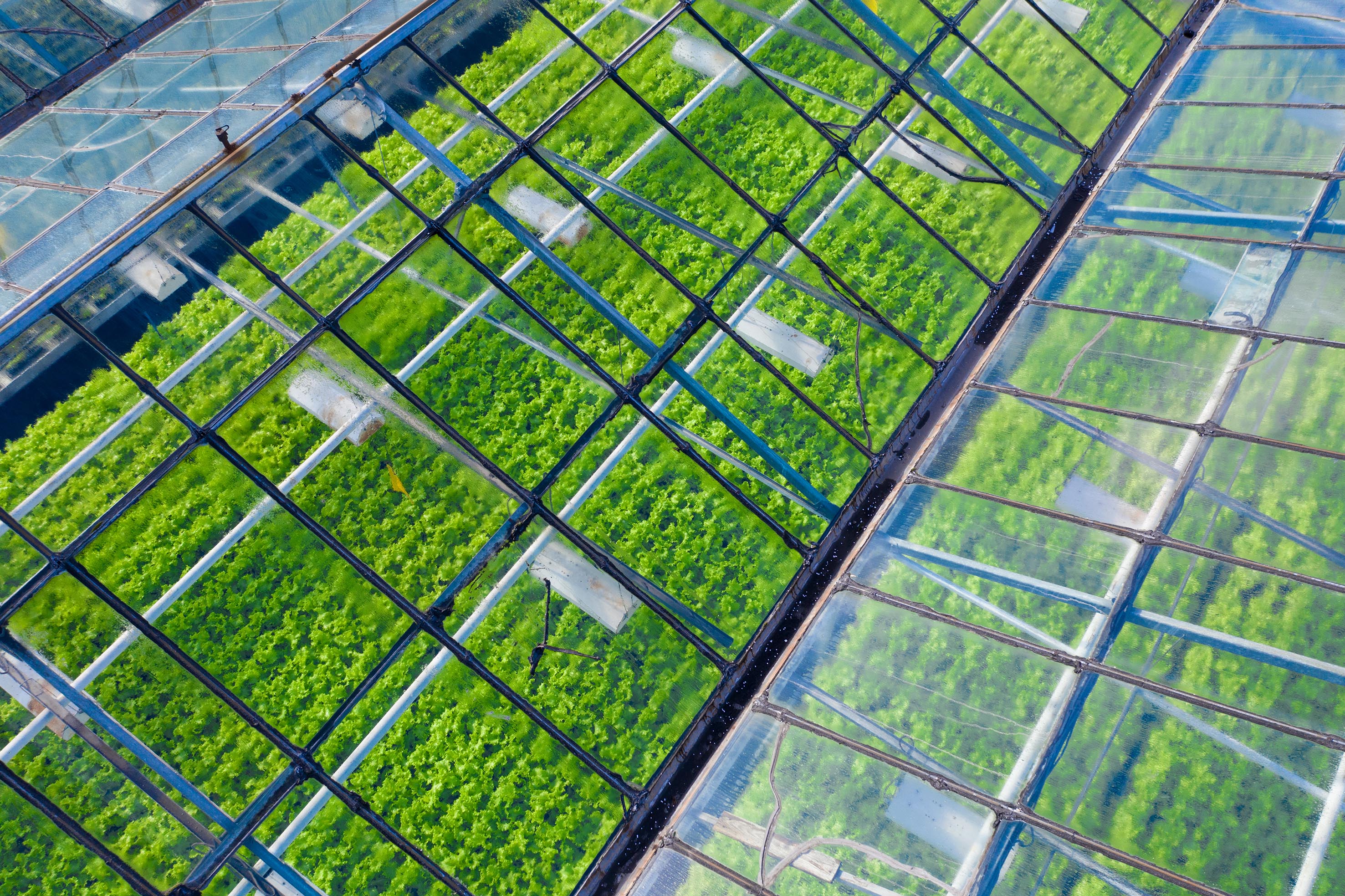
Modern protected growing systems such as glasshouses and polytunnels create unique, and changing micro-environments which can slow the breakdown times of pesticide actives by days, weeks or even months compared to labelled times.
The development of PRISM
Well, it turns out that developing a robust solution capable of much more accurately predicting the rate of breakdown of the world's vital pesticides, in all the world's varied protected growing systems, everywhere on the planet is a really difficult problem to solve.
In fact, in order to successfully develop PRISM, we first had to make significant advances across multiple disciplines. These included chemistry, sensor engineering, and advanced algorithm design and optimisation.
We also relied on other amazing teams around the world developing the next generation of optical imagery provided by Earth Observation Satellites, application specific atmospheric modelling techniques and significant advances in both mobile device computational power and network speeds.


Building Our Team
In short, it would not have been possible for us to develop PRISM if we hadn't been able to expand our team to include some of the world's most creative talent across these vital technology areas.
It's been an amazing journey getting to this point, and we have a little more work to do before PRISM's powerful technology can be offered to the industry.
Back to where it all began
The development of PRISM started with industry and we're now hoping industry will partner with us as we work towards releasing the first version of our PRISM app in 2026.
We're asking growers, and stakeholders from across the wider fresh produce supply chain, to share their thoughts on how they would like to see PRISM develop. It would be great for us to better understand how best we can represent PRISM's data to the industry, and whether there are any additional services PRISM could offer that would be useful.
If helping shape how PRISM develops is something you'd be interested in, you can email us from our Contact page.
Get in Touch